
'We should watch -- in the near term -- for signs that the two have totally fallen out at a personal, political level.' 'Trump and Modi know how to be dealmakers, but they also know how to hold a grudge.'

China has objected to Indian Minister Kiren Rijiju's remarks on the Dalai Lama's reincarnation, urging India to be cautious on Tibet-related issues to avoid impacting bilateral relations. China insists any future Dalai Lama must receive its approval.

'Geopolitically and diplomatically it's a very difficult situation for India.'
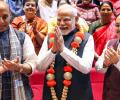
In his first address to National Democratic Alliance MPs in over a year, Prime Minister Narendra Modi on Tuesday emphasised its collective identity as a natural and organic alliance, asserting that its journey since its foundation in 1998 is dotted with successes and has many more achievements in store.
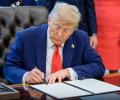
The collective West has always opposed strong leaders and economic development in India, asserts Colonel Anil A Athale (retd).
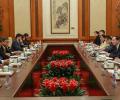
In the talks, China emphasised that the two sides should proceed from the fundamental interests of China, India and adhere to the strategic height and long-term perspective of China-India relations, the readout said.
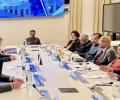
India has secured international support in its fight against terrorism, with Russia, Japan, and the United Arab Emirates expressing solidarity and a commitment to working together to combat the threat. This follows a recent terrorist attack in Pahalgam, India, which claimed 26 lives. Multi-party parliamentary delegations from India briefed the leaderships of these countries on Operation Sindoor, India's response to the attack, and discussed ways to enhance cooperation in counter-terrorism and combating radicalism. These developments highlight the growing global consensus against terrorism and the importance of international collaboration to address this shared challenge.

The five-nation grouping BRICS on Tuesday resolved to combat terrorism in all its forms and manifestations, including the cross-border movement of terrorists, and vowed to step up joint efforts in building support for an India-backed global framework to effectively deal with the menace.

In August, the top BRICS leaders at the grouping's summit in Johannesburg approved a proposal to admit six countries, including Argentina, into the bloc with effect from January 1.

Both men spent most of their careers in their nations' intelligence services before they ascended to bigger roles -- Doval in the Intelligence Bureau; Putin in the KGB.
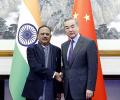
He said that in recent times, based on the important consensus reached by the leaders of the two countries, China and India have maintained close communication on the border situation through diplomatic and military channels and achieved great progress.

India and China held talks in New Delhi to discuss the lessons learned from the eastern Ladakh military standoff and prevent its recurrence. The two sides also prepared for the next meeting of the Special Representatives on the boundary question. The talks took place under the framework of the Working Mechanism for Consultation and Coordination on India-China Border Affairs (WMCC). Both sides highlighted the importance of regular exchanges and contacts at diplomatic and military level to maintain peace and tranquility in the border areas.
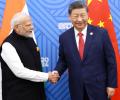
Chinese President Xi Jinping on Wednesday pledged to strengthen the strategic relationships with neighbouring countries by 'appropriately' managing differences and enhancing supply chain ties as China's tariff war with the United States escalated.
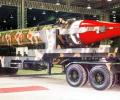
The US intelligence assessment highlights Pakistan's near-certain procurement of weapons of mass destruction-applicable goods from foreign suppliers, primarily through Chinese support.

Jaishankar said that both sides also exchanged views on the next steps in the India-China bilateral ties.
Chinese Foreign Minister Wang Yi said on Friday that India-China relations have made positive strides and achieved a series of encouraging outcomes at all levels after last year's breakthrough ending the over four-year-long military standoff in eastern Ladakh. Wang's remarks came during his annual press conference as he replied to a question on how Beijing views the course of bilateral ties after the two countries ended the prolonged stalemate in the ties.
Chinese Foreign Minister Wang Yi has called on India to implement the consensus reached by Prime Ministers Narendra Modi and Xi Jinping at their summit in Russia, urging a restart of bilateral ties. Wang emphasized the importance of respecting each other's core interests, enhancing mutual trust, handling differences effectively, and bringing the relationship back on track. He suggested practical steps such as resuming flights, easing visa procedures, and planning commemorative activities for the 75th anniversary of diplomatic relations. Wang also highlighted the shared interests and opportunities for cooperation between the two countries, advocating for mutual development and strengthening coordination in international affairs.
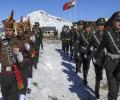
China and India were able to "reduce differences" and build "some consensus" on disengaging troops from friction points to end the standoff in eastern Ladakh and agreed to maintain dialogue to reach a resolution acceptable to both sides at an "early date", the Chinese defence ministry said on Thursday.

The BRICS nations on Friday underlined the need for using local currencies in international trade and financial transactions besides committing themselves to supporting rule-based open and transparent global trade. A joint statement issued at the end of the meeting of the BRICS Ministers of Foreign Affairs and International Relations, also pressed for a robust Global Financial Safety Net with a quota-based and adequately resourced International Monetary Fund (IMF) at its centre. It further said the process of IMF governance reform under the 16th General Review of Quotas, including a new quota formula as a guide, should be completed by December 15, 2023.
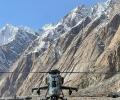
Defence sources stated that the disengagement involves removing infrastructure and withdrawing troops from both sides. The process is expected to be completed by Tuesday.
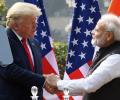
Prime Minister Narendra Modi and United States President Donald Trump on Monday vowed to work towards a 'trusted' partnership with a focus on boosting India-US cooperation in areas of trade, energy and defence in their first phone conversation since the American leader's inauguration last week.

China on Thursday said the meeting between Prime Minister Narendra Modi and Chinese President Xi Jinping in Russia's Kazan on Wednesday carries a "great significance" as they reached an "important common understandings" to improve the bilateral ties.
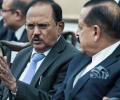
National Security Advisor Ajit Doval is likely to travel to Beijing within the next few weeks to lead the Indian delegation at a new edition of the Special Representatives dialogue on the larger boundary question that will be held after a gap of nearly five years, authoritative sources said.

Once the Canadian investigation runs its course, Ottawa may put on the public domain further accusations passing for "evidence" -- and that could happen at some point closer to our general election. All in all, the big question is, what is it that the US is really up to, asks Ambassador M K Bhadrakumar.
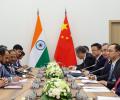
According to informed sources, Doval will arrive in Beijing on Tuesday to attend the crucial talks, which were expected to provide a way forward for the two countries to normalise the relations.

India and China have held their first diplomatic talks since withdrawing troops from two face-off points in eastern Ladakh, reflecting on the lessons learned from the border row to prevent future incidents. The two sides agreed to maintain peace and tranquillity in border areas, prepare for the next meeting of Special Representatives on the boundary question, and highlighted the importance of regular exchanges and contacts at diplomatic and military levels. The talks come after the completion of the disengagement process from the last two friction points, following an agreement finalized in October 2022.
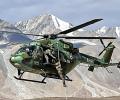
India has lodged a "solemn protest" with China over the establishment of two new counties in the Hotan prefecture, as parts of these regions fall within India's union territory of Ladakh. The Indian government asserted that the creation of these counties will not impact its sovereignty over the area and does not lend legitimacy to China's "illegal and forcible" occupation.
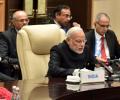
Modi in his address to the BRICS Leaders Meeting in Hangzhou said "terrorists in South Asia or any where for that matter do not own banks or weapons factories". "Clearly someone funds and arms them and BRICS must intensify joint efforts not just to fight terror but to coordinate actions to isolate those who are supporters and sponsors of terror," he said, without naming Pakistan which is a close ally of China.
India on Monday announced it has reached an agreement with China on patrolling along the Line of Actual Control (LAC) in eastern Ladakh, in a major breakthrough in ending the over four-year-long military standoff ahead of a likely meeting between Prime Minister Narendra Modi and Chinese President Xi Jinping in Russia this week.
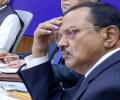
National Security Advisor Ajit Doval arrived in Beijing on Tuesday to take part in the India-China Special Representatives' talks to be held on Wednesday aimed at restoring the bilateral ties stalled for over four years' due to the military standoff in eastern Ladakh.
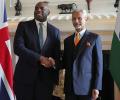
India's External Affairs Minister S Jaishankar has stated that the US administration under President Donald Trump is moving towards multipolarity, which aligns with India's interests. He also revealed that India and the US have reached an agreement on the need for a bilateral trade pact. Jaishankar touched upon various foreign policy issues including India's role in the Russia-Ukraine conflict, the trajectory of the BRICS grouping, and relations with China during a session at the Chatham House think-tank in London.

Russian President Vladimir Putin on Tuesday thanked Prime Minister Narendra Modi for trying to help find a peaceful solution to the Ukraine crisis.

In their first structured bilateral talks in nearly five years, Prime Minister Narendra Modi and Chinese President Xi Jinping Wednesday agreed that India and China can have a 'peaceful and stable' relationship by displaying maturity and mutual respect and endorsed the pact on the resolution of the dragging eastern Ladakh border row.

India and China have made "some progress" in disengagement, External Affairs Minister S Jaishankar said on Sunday, describing it as a "welcome" move which opens up the possibility that other steps could happen.
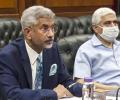
'Terrorism continues to be the overwhelming threat to security and stability in the SCO region and therefore Dr Jaishankar strongly pitched for 'collective action',' observes Dr Rajaram Panda.
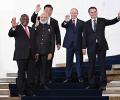
Chinese President Xi Jinping will attend the 13th BRICS summit to be held on Thursday at the invitation of Prime Minister Narendra Modi, China's foreign ministry announced in Beijing on Wednesday.
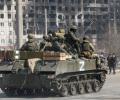
The Indian side is in "very close touch" with interlocutors in the foreign and defence ministries of Russia on the issue of Indians "who were, illegally or otherwise, contracted into fighting in the Russian Army", Misri said at a media briefing on Modi's visit to Russia for the BRICS Summit.
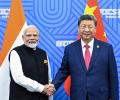
The Galwan clash occurred six months after the Doklam disengagement and two high-profile meetings. India should not be caught by surprise once again, asserts former foreign secretary Shyam Saran.
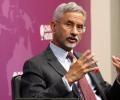
"From President Trump's perspective, the one big shared enterprise that we have is the Quad, which is an understanding where everybody pays their fair share. There are no free riders involved. So that's a good model which works," he said. The Quad alliance consists of the US, India, Australia and Japan.
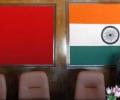
India and China have agreed to take measures to further ease the situation at the borders while continuing to implement the October agreement to resolve the standoff in eastern Ladakh comprehensively. The two sides held the 32nd meeting of the Working Mechanism for Consultation & Coordination on China-India Border Affairs (WMCC) in New Delhi, agreeing to maintain communication through diplomatic and military channels and safeguard sustainable peace and stability in the border areas. This meeting follows the October 21 agreement between the two countries to resolve the over four-year-long military standoff in eastern Ladakh.
 © 2026 Rediff.com - Advertise with us - Disclaimer - Privacy Policy - Sitemap - Feedback - About us - Terms of use - Grievances